Can a single platform really combine fast image creation, smart editing, and face swap tools while staying safe and legal?
Dessi AI claims to bundle 40+ creative tools and 50+ models into one easy-to-reach platform, with quick results and Telegram access.
In this practical review for U.S. readers, we look at what the tool says it does versus real-world use. Expect notes on how outputs shift with prompts, settings, and expectations.
We set a safety-first tone. Adult image creation and face swap features carry clear consent and legal risks, and those issues matter as much as image quality.
By the end, you will know who the generator suits, how the free plan compares to paid tiers, and how it stacks up against Canva, Adobe Express, and Figma in everyday workflows.
Key Takeaways
- One-stop platform with many creative tools, but results vary by prompt and settings.
- Free plan offers basics; paid tiers add speed, consistency, and control.
- Image quality, speed, and customization are primary evaluation points.
- Face swap and adult features require strict consent and legal care.
- We compare daily workflows to popular design tools for practical context.
What Dessi AI Is and What It Claims to Do
Here’s a plain-language look at the platform’s advertised features and where they fit in real workflows.
Fast image generation from text prompts
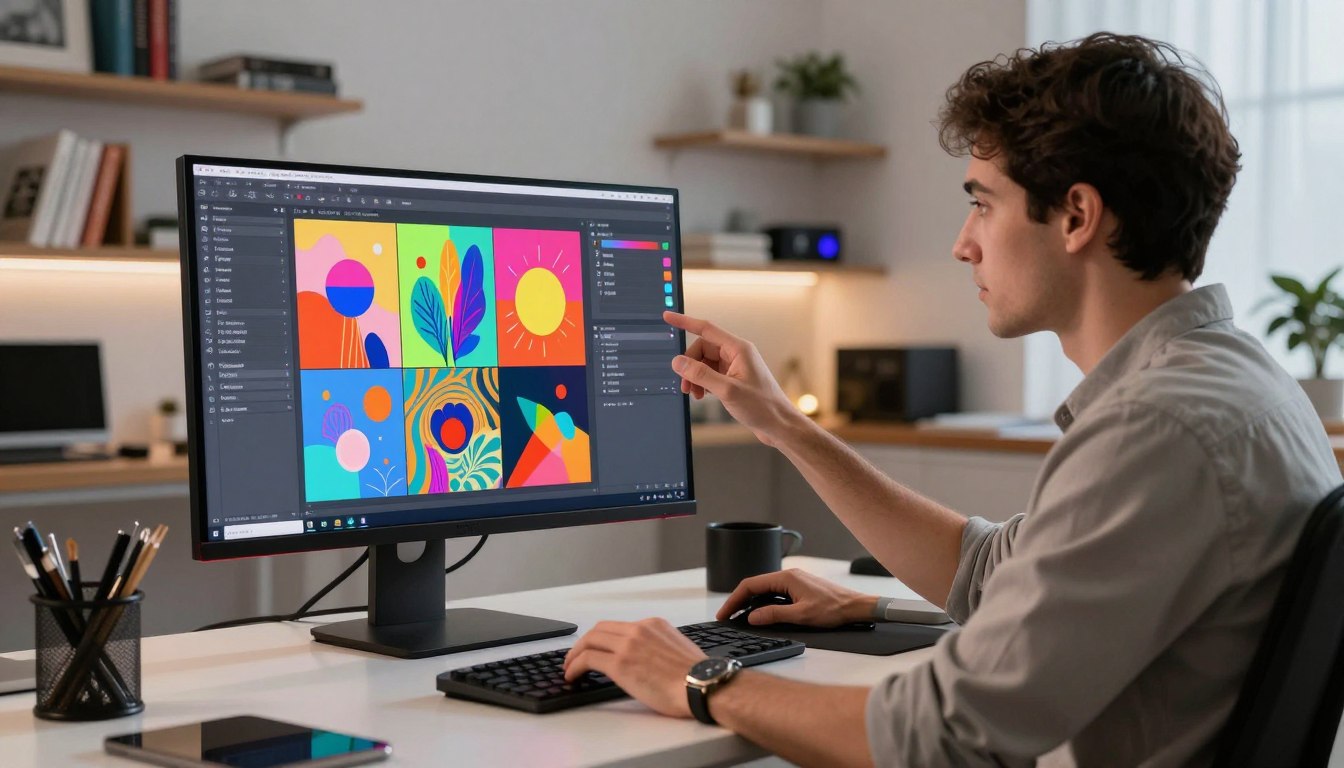
The service is a browser-based platform that turns short text prompts into images in seconds. That speed helps content-heavy teams iterate fast. Quick output is useful for ideas, but speed rarely means the result is publish-ready.
Smart editing for existing images
Beyond prompt-to-image, the tools offer smart edits that adjust composition, color, and small details.
This lets creators refine a photo or swap backgrounds without starting over. Think of it as guided image creation and polish combined.
Face swap and adult-positioning notes
Some pages present face-swap and adult image creation as available features. Responsible use and clear consent are non-negotiable due to legal and ethical risks.
Where it sits among familiar design platforms
Conceptually, it sits between template-first services (Canva), polished suites (Adobe Express), and collaborative design tools (Figma). The aim is to speed ideation and iteration for social and marketing workflows.
| Feature | Template tools | Pro suites | This platform |
|---|---|---|---|
| Ease | High | Medium | High |
| Speed for concepts | Medium | Low | High |
| Fine control | Low | High | Medium |
| Best use | Quick posts & templates | Polished, brand work | Rapid ideation & edits |
Dessi AI Features Overview: Tools, Models, and Creation Options
Creators get a wide mix of generation and polish features that speed up idea-to-image work.
40+ tools and 50+ models for style and format
The platform advertises 40+ tools that cover generation, retouching, background swaps, and layout presets. Those tools let you jump between quick mockups and more refined edits with minimal friction.
Practical customization controls
There are dozens of controls for style direction, color palettes, backgrounds, hair and clothing types, and mood sliders. This level of customization gives clear options for consistent campaigns and A/B testing.
When to edit and when to create fresh
Image editing is ideal when you have a strong base photo and need small fixes. Fresh generation works best for rapid ideation or new concepts.
The tradeoff is simple: many tools and models speed experimentation but can cause decision fatigue. In our hands-on tests, model choice often affected realism and consistency, while extra color tweaks usually needed manual cleanup.
How the Dessi AI Generator Works in Real Use
A quick trial makes it clear: specific prompts yield stronger, faster results than vague ones.
Prompt-to-image steps and why detail matters
Start by writing a clear prompt, pick a style or model, then generate several options. Expect the first pass to be a draft, not the final asset.
Concrete prompt example: “Bold sans-serif headline, teal accent, 40/60 image-to-text ratio, warm lighting, 3:2 crop.” That level of direction beats “make it pop” every time.
Review, tweak, and export
The review step is the make-or-break moment. Check legibility, composition, and whether the image reads at real viewing size.
Tweaks usually focus on fonts, spacing, and color accents. Speed helps when review stays short; it becomes less useful if you redo heavy edits repeatedly.
Export and practical notes
Choose output size by platform: social, web, or print. Free exports may carry watermarks or lower resolution, so plan for upgrades if you need clean, high-res results.
| Step | What to check | Typical time |
|---|---|---|
| Write prompt | Style, color, crop, wording | 1–3 minutes |
| Generate options | Choose 3–5 variants | seconds to 1 minute |
| Review & tweak | Legibility, composition, brand fit | 2–10 minutes |
| Export | Size, resolution, watermark check | 1–2 minutes |
Expectation note: your results improve with time as you collect prompts that consistently work. Over weeks, the process becomes faster and the results more reliable.
Hands-On Results: Image Quality, Speed, and Consistency Over Time
Quick generation impresses at a glance, yet deeper inspection reveals extra work is often needed.
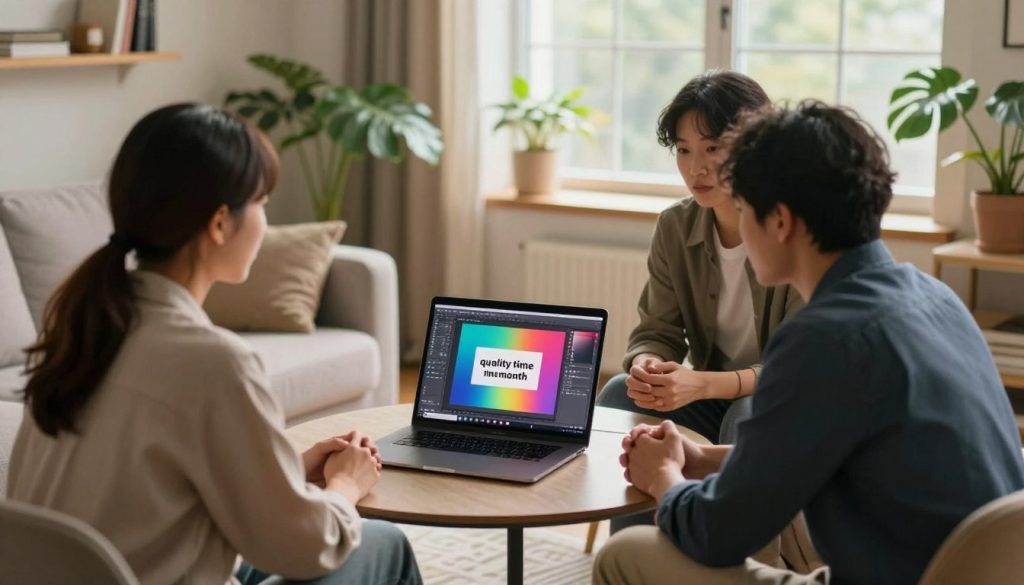
First-month reality check: Early testing produced five designs in about 45 minutes, but only two were immediately usable. Expect fast drafts, not final exports. Many pieces need fixes for readability, spacing, or composition.
Weeks two through eight: Prompt refinement and repeatable templates raised the hit rate. As creators logged prompts, the quality and consistency improved and wasted time dropped.
Longer-term productivity and risks
Tracked time showed a 39% reduction per deliverable (from 2.3 to 1.4 hours), saving roughly 6–8 hours per week for active users. That math matters when you bill by the hour.
Quality floor: Even weaker outputs work for drafts and mockups, easing blank-page friction. Balance that with a 30% risk of a generic look unless you customize layouts and lock brand colors.
Practical tip: Keep prompt templates, run a short QA checklist, and schedule brief edits to maintain consistent quality over months.
Face Swap, Photo Editing, and Adult Content Use Cases
Face swaps and targeted photo edits are powerful when handled as deliberate workflows rather than quick tricks.
Preparing for the best face swap results
Good face swap results start long before you press generate — they begin with careful photo selection and lighting control.
Use well-lit, front-facing photos with similar angles for source and target. High-resolution photos without heavy filters give cleaner blends and fewer artifacts.
A short prep checklist:
- High-res, front-facing source and target photos
- Minimal filters and consistent lighting
- Clean backgrounds to reduce edge artifacts
Practical image-to-image edits
Image editing use cases that stay mainstream include refining composition, sharpening detail, and improving clarity for social thumbnails or product shots.
These edits help users speed up workflows while keeping assets safe for broad use.
Risks, failure modes, and adult content responsibilities
Typical failure modes: mismatched lighting, odd hairline blends, and uncanny facial details that need a regenerate or manual retouch.
| Issue | Why it happens | Fix |
|---|---|---|
| Lighting mismatch | Different source angles | Reshoot or match with lighting tools |
| Unnatural blending | Low-res or filtered photos | Use cleaner photos or manual touch-up |
| Uncanny details | Model artifacts | Regenerate and pick better source images |
On adult content and porn: only create or distribute explicit images with clear, documented consent from everyone shown. Follow US laws and platform rules for storage and sharing.
Do not use this tech to deceive or target real people without permission. Keep consent records, use only images you own or have rights to, and avoid any non-consensual uses.
User Experience in the US: Interface, Access, and Platform Reliability
The US user experience centers on a clean interface that keeps common tasks a click away.
Interface design favors speed over deep, technical panels. Controls are simple, readable, and aimed at quick edits. For busy creators, this cuts the steps it takes to go from idea to image.
Quick-start access and Telegram
The no-login, quick-start promise reduces friction for first-time users. It lets people test results fast without committing to an account. Telegram access adds a mobile-first path for fast experiments and on-the-go work.
Reliability and internet dependency
Because the platform runs in the cloud, stable connectivity matters. During peak hours some users report slowdowns or brief glitches that add time to workflows.
- Batch generations before deadlines.
- Export early and store backups.
- Keep a secondary tool ready for urgent client work.
Bottom line: the smooth UX and easy access make the service likely to become a daily tool for many users—provided you plan for occasional downtime.
Who This Tool Is Best For (and Who Should Skip It)
This section helps you decide if the platform fits your daily needs.
Best fit: creators, social media managers, freelancers, and small businesses that publish often.
For frequent publishers, the biggest advantage is speed. You can spin up multiple post ideas fast and pick a direction. That saves time in reviews and shortens client feedback loops.
Freelancers benefit because quick iteration reduces back-and-forth. Show several variations, get approvals faster, and keep your hourly work efficient.
Small businesses get a higher-quality look without hiring a designer. Simple campaigns and recurring posts gain polish from templates and consistent presets.
When to skip this tool
Teams that need pixel-perfect layouts, strict brand control, or professional print color management should look elsewhere. This service trades fine-grain control for speed.
If you create only a few pieces per month, the subscription and learning curve may not pay off. Infrequent users often find manual tools more cost-effective.
| Best For | Why It Fits | When to Skip |
|---|---|---|
| Content creators & social managers | Fast concepts, templates, repeatable posts | Need exact brand layouts |
| Freelancers | Quick client iterations, multiple options | Pixel-perfect contract deliverables |
| Small businesses | Better design look without deep design experience | Print campaigns or high-end brand work |
Quick decision rule: if you need fast options and can tolerate light manual cleanup, it’s a fit. If you require perfect precision for every piece, choose traditional design tools that preserve exact brand and print quality.
Pricing, Subscription Options, and What You Get for Free
Choose a plan that matches how often you create and how polished the exports must be.
Free plan (best for testing)
The free tier gives 10 generations per month and watermarked downloads. It’s ideal for trying prompts and quick mockups but not for client-ready files.

Pro: $29/month (or $290/year)
Pro removes limits, offers unlimited generations, high-res exports, a saved brand kit, and priority support. That extra support helps when deadlines hit and something breaks mid-project.
Business: $79/month (or $790/year)
Designed for teams, Business includes collaboration for up to five members, API access, custom brand templates, and advanced features for scale.
ROI lens: translate saved hours into value
If the platform saves ~6–8 hours per week, a freelancer charging $35/hour can recover a $29 subscription in one month. Even modest weekly time savings often outweigh the price for regular creators.
- Free: test and learn.
- Pro: unlimited work and faster support.
- Business: team scale and integrations.
Pros That Stand Out in Daily Workflows
Daily workflows improve when tools speed repetitive tasks without sacrificing clarity.
Speed for repetitive design and content creation
Fast output matters. For weekly social posts and recurring promos, the platform cuts the time spent on variants and resizing.
That speed frees teams to run more experiments and ship more content on schedule.
Idea generation to break creative blocks
Generating multiple layout directions helps spark fresh ideas even if you only use parts of the output.
This process reduces blank-page anxiety and accelerates concept development.
Client iteration and quick option rounds
Show several options quickly to narrow a brief. Clients choose direction sooner and rounds fall from many to just a few.
Learn design principles by observation
Studying generated layouts teaches hierarchy, spacing, and contrast. Non-designers gain a higher quality floor for everyday assets.
| Pro | Benefit | When it helps |
|---|---|---|
| Speed | Faster batch creation | Weekly posts, thumbnails |
| Idea variety | Multiple concepts fast | Creative blocks, campaign kickoff |
| Consistency | Better baseline quality | Non-designer teams |
Pro tip: save and reuse top prompts as templates to standardize your process. Treat the tool as a co-pilot and always do a final review for brand fit and polish.
Cons and Limitations to Know Before You Subscribe
Before you commit to a subscription, note several real limits that affect brand-led projects.
Brand consistency drift: uploaded brand kits help, but colors often come out “close but not quite.” Typography and small hue shifts can force a manual audit for every output. That adds time when a campaign must match an established palette.
Limited fine control
When you need pixel-perfect nudges, the editor can feel restrictive compared with professional design suites. Tiny layout moves and exact spacing are harder to lock in, and that slows down work on tight brand assets.
Prompts learning curve and variable outputs
Clear prompts matter. It can take weeks to learn what reliably produces usable layouts. Many generations are almost right, so you may waste time regenerating instead of shipping results.
Print and color management gaps
If your project needs precise print specs, expect frustration. Color profiles and CMYK accuracy are weaker than in print-focused tools, so plan a final pass in a proper editor for any print deliverable.
- Mitigate with a short QC checklist.
- Standardize prompt templates for consistent work.
- Use a precision editor for final print or brand-critical files.
Bottom line: these limits are manageable for social-first design, but they matter a lot for brand-critical projects where color fidelity and exact spacing define quality.
Privacy, Support, and Responsible Use
Trust matters when you put client photos or brand assets into an online image tool.
Privacy notice claims and what “anonymous browsing” implies
The site claims it does not collect personal data or use cookies and offers “anonymous browsing.” In practice, anonymous browsing means sessions may not save your account data, but uploaded files still pass through servers. That reduces traceable tracking but does not guarantee permanent deletion.
Verify privacy expectations before uploading sensitive images. If you work with client faces or brand assets, ask the platform for retention and deletion policies in writing.
Support responsiveness and common resolution patterns
Support responses typically arrive within a same-day window—around 4–6 hours during business hours—but answers can be templated and may need follow-up.
To speed resolution, include clear reproduction steps, export settings, and screenshots. That helps support triage and reduces back-and-forth.
Copyright, consent, and responsible use
Do not ask the platform to recreate protected logos, competitor designs, or trademarked layouts. Use the tools to spark creativity and build original compositions instead.
For face swap and adult-adjacent features, only proceed with documented consent and lawful distribution plans. Ethical use protects your reputation and keeps users and clients safe.
- Quick checklist: confirm retention policy, log support tickets with screenshots, and require signed consent for sensitive work.
- Treat privacy, consent, and copyright as part of professional design practice—non-negotiable for trusted client relationships.
Conclusion
,After six months of regular use, the verdict is clear: Dessi AI works best as a generator and workflow accelerator for repeatable social graphics and video thumbnails.
Real use delivered faster workflows and measurable wins — about a 23% lift in click-through for thumbnails and roughly 39% time savings on deliverable packages.
It speeds concept-to-publish time for videos and images, but it does not replace judgment or manual editing. Brand consistency and quality still need review to avoid a generic look.
Run a one-month pilot: test a few thumbnail projects, track time saved, and compare CTR and engagement. Use the tools to support your art and creativity, not as the final decision-maker.
Responsible use reminder: face-swap and adult content carry legal and ethical risks; get clear consent and follow laws before creating or sharing such content.